
Back to MphaR main website

Virtual Platform Website

Request Demo Version
%403x.svg)


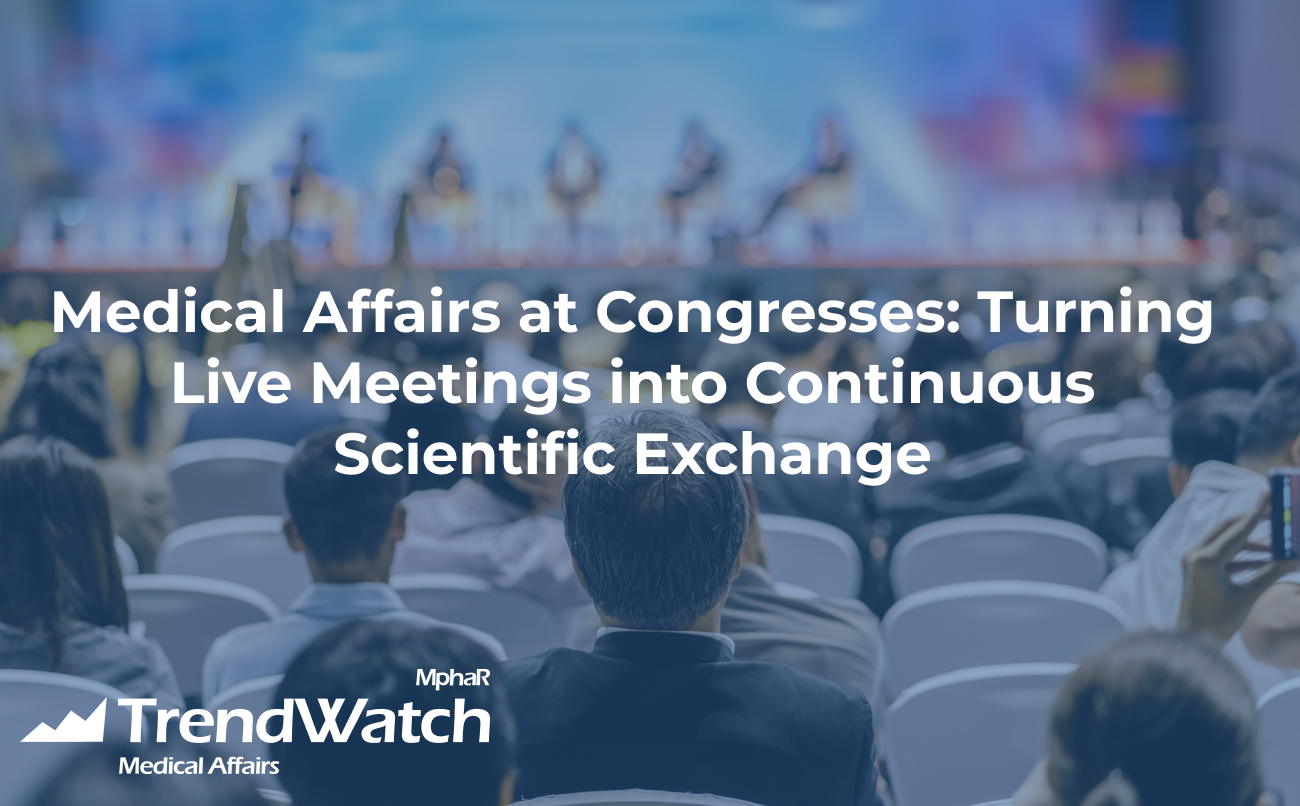
Scientific congresses have long been central to the Medical Affairs (MA) ecosystem, serving as critical venues for knowledge dissemination, stakeholder engagement, and evidence exchange. However, the traditional model, centered on a few intense days of activity, no longer aligns with the pace of modern science or the expectations of healthcare professionals (HCPs). Advances in digital technology, the growing complexity of therapeutic landscapes, and the need for ongoing dialogue have transformed congresses from isolated events into dynamic, multi-phase engagement opportunities.
Medical Affairs organizations increasingly recognize that congress impact is maximized when engagement begins well before the meeting and continues long afterward. Digital platforms, data analytics, and hybrid communication models now allow MA teams to extend scientific conversations across time and geography. This shift positions congresses not as endpoints but as catalysts within a continuous scientific exchange ecosystem, where insights, relationships, and evidence evolve throughout the year.
Despite technological advancements, many organizations still operate within legacy congress engagement models that limit strategic impact. Real-time insights generated during congress discussions are often captured inconsistently or lost entirely, reducing opportunities to translate valuable intelligence into actionable strategy. Engagement remains heavily concentrated within a short timeframe, creating operational pressure while constraining meaningful scientific dialogue. Post-congress follow-up is frequently fragmented, with disconnected activities across functions that dilute the potential value of interactions initiated during the meeting.
However, early indicators of transformation are emerging across the industry. Mobile applications supporting session scheduling, polling, and interactive engagement have begun to enhance participant experience and data capture. Hybrid session formats—combining live and virtual audiences—have expanded reach and accessibility. Rapid-summary pilots, including AI-assisted content distillation, demonstrate how insights can be disseminated internally within hours rather than weeks. These early successes highlight the opportunity for Medical Affairs to transition toward a more continuous, strategically integrated congress engagement model.
A structured, multi-phase approach enables Medical Affairs teams to transform congress participation into sustained scientific exchange.
Pre-congress preparation is increasingly recognized as a determinant of overall engagement success. Identifying priority therapeutic topics, mapping key experts, and aligning objectives across internal stakeholders establishes a strategic foundation. Deploying agendas, educational micro-content, and briefing materials before the meeting primes stakeholders for more productive discussions. Digital engagement channels—such as webinars, virtual advisory touchpoints, and targeted communications—can initiate early scientific dialogue, ensuring that conversations at the congress begin at a deeper level rather than from baseline awareness.
During the congress itself, Medical Affairs functions as both a facilitator and an intelligence hub. Live polling, application-based Q&A, and digital poster engagement enable interactive dialogue while generating structured data. AI-enabled note synthesis tools can capture themes, sentiment, and emerging questions in real time, significantly reducing reliance on manual documentation. Immediate content distillation allows internal teams to access key insights rapidly, supporting agile decision-making during the meeting.
Structured one-to-one engagements with key opinion leaders (KOLs) remain central to scientific exchange. When supported by professional medical writing and documentation processes, these interactions can be converted into reusable insights that inform evidence planning, publication strategies, and educational initiatives. This transformation from informal conversation to structured knowledge asset represents a significant evolution in congress value generation.
The post-congress period offers the greatest opportunity to sustain momentum. Virtual roundtables, expert follow-up discussions, and digital educational sessions can extend dialogue initiated onsite. AI-generated summaries and thematic trend reports enable Medical Affairs teams to synthesize learnings across sessions and stakeholder interactions efficiently. Integrating these outputs into broader evidence strategies ensures that congress insights inform long-term planning rather than remaining isolated observations.
Continuous engagement models also strengthen relationships with stakeholders, demonstrating responsiveness and commitment to ongoing scientific collaboration. Over time, this approach enhances credibility and positions Medical Affairs as a trusted scientific partner rather than a periodic event participant.
Successfully transforming congress engagement requires coordinated investment across people, processes, technology, and partnerships. Skilled scientific communicators and digital interaction specialists are essential to design meaningful engagement experiences and manage hybrid interactions effectively. Structured processes for insight capture, documentation, and follow-up ensure that valuable information is translated into actionable outcomes.
Technology plays a pivotal role in enabling continuity. Congress applications, AI summarization tools, and omnichannel engagement platforms allow interactions to be captured, analyzed, and extended across multiple touchpoints. Compliance-ready digital environments—such as those used by MphaR—support secure, traceable engagement across pre-congress, onsite, and post-congress phases while meeting regulatory requirements. Partnerships with scientific societies, digital vendors, and external experts further enhance reach and innovation capacity.
Similarly, organizational alignment is also an important component. When Medical Affairs collaborates closely with R&D, commercial, and market access teams, congress insights can influence strategic decisions more effectively. This cross-functional integration ensures that the scientific intelligence generated during meetings contributes to broader organizational objectives.
Traditional congress metrics—such as booth traffic or attendance numbers—provide limited insight into true scientific value. A more sophisticated measurement framework focuses on the quality and relevance of insights captured, the depth of stakeholder engagement across phases, and the influence of congress learnings on evidence plans and strategic decisions.
Metrics may include the number of actionable insights generated, engagement duration across digital platforms, participation in follow-up activities, and integration of congress-derived intelligence into publications or evidence strategies. Continuous feedback loops allow Medical Affairs teams to refine engagement approaches over successive congress cycles, creating a culture of ongoing improvement.
Longitudinal benchmarking further strengthens impact assessment. Comparing engagement quality and outcomes across multiple events enables organizations to identify best practices and optimize resource allocation. Ultimately, success is defined not by the intensity of congress activity during a few days but by the sustained scientific exchange that follows.
The evolution of congress engagement reflects a broader transformation within Medical Affairs—from episodic interaction toward continuous scientific partnership. By extending conversations across pre-meeting preparation, real-time exchange, and post-congress follow-up, organizations can unlock significantly greater value from scientific meetings. Sustained engagement strengthens relationships with experts, improves insight generation, and enhances scientific leadership credibility.
Platforms and integrated service models, including those offered by MphaR, play a critical role in enabling this shift by connecting congress interactions with structured documentation, insight synthesis, and downstream Medical Affairs activities across the lifecycle. As digital capabilities mature, congress participation will increasingly function as one component of an ongoing scientific dialogue rather than a standalone event. Organizations that embrace this new mindset will position Medical Affairs as a central driver of continuous knowledge exchange, strategic insight, and long-term stakeholder trust.
.png)
.png)
.png)
.png)
.png)
.png)
.png)
.png)
.png)
.png)
.png)
.png)
.png)
.jpg)
.png)
.png)
.png)

.png)


